United Kingdom · essay
Digital Visual Arts & Scenography in Entertainment Spaces
Discover modern scenography design and digital visual arts architecture for UK entertainment spaces. Insights on immersive environment design and stage spatial aesthetics.
Why modern scenography design matters today
Modern scenography design shapes how people feel and move in entertainment spaces. It blends architecture, lighting, projection, sound and stagecraft into a single experience. In the UK and beyond, audiences expect more than a static backdrop. They want environments that respond, tell stories and invite interaction. For venues, good scenography increases engagement, makes performances memorable and helps venues stand out in a crowded cultural scene.
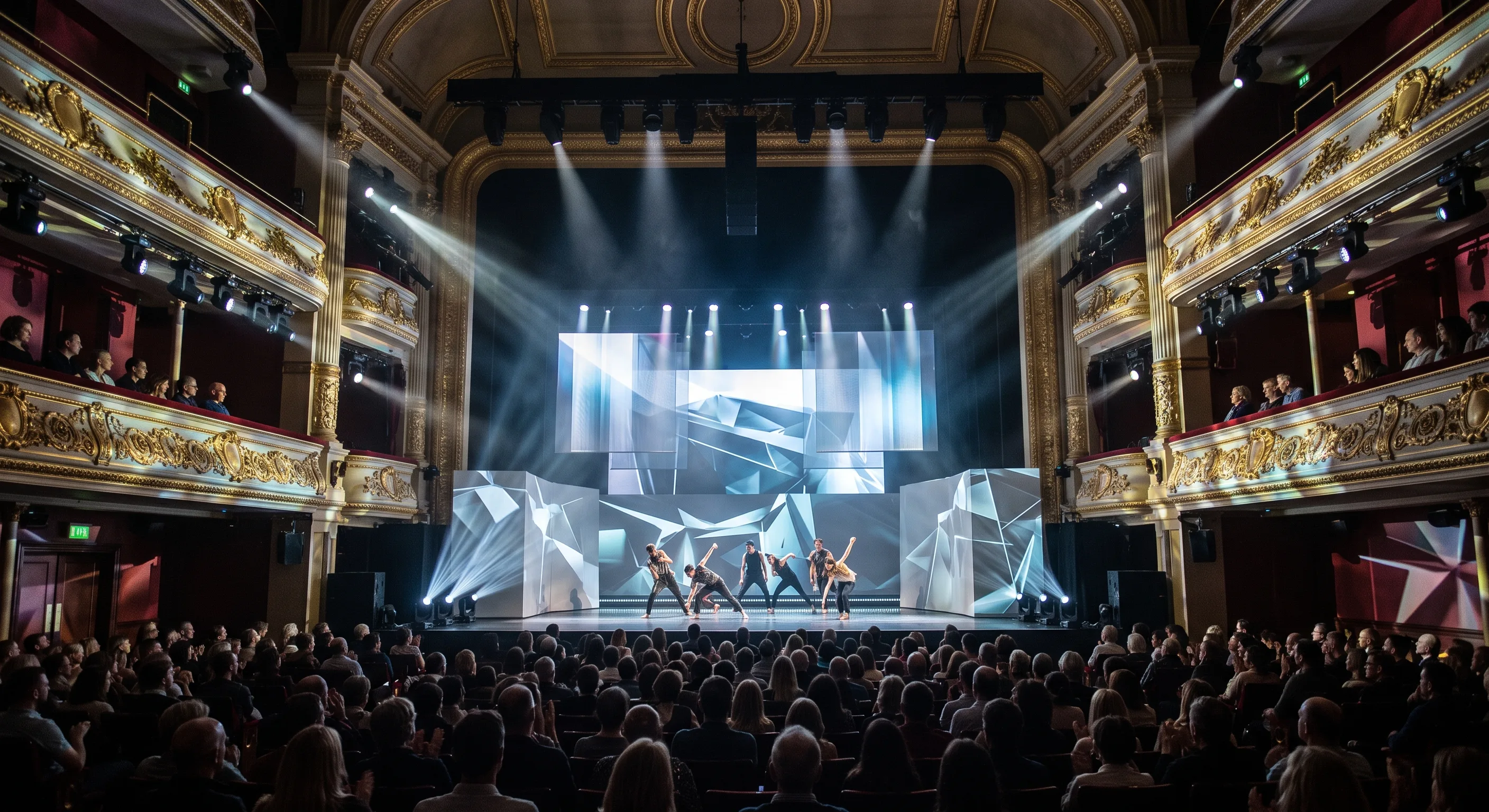
Scenography has moved from painted flats and rigid sets to flexible systems that combine digital visual arts architecture and physical elements. That shift lets designers create immersive environments with fewer physical changes between scenes. The result is more fluid storytelling and better use of venue space.
Key components of digital visual arts architecture
Digital visual arts architecture is the backbone of contemporary entertainment design. It includes projection mapping, LED walls, 3D visualisations, motion graphics and spatialised lighting. These tools let creative teams layer content across walls, floors and objects. Rather than treat visuals as separate from set design, this approach integrates media with physical form.
Designing immersive environment design that works
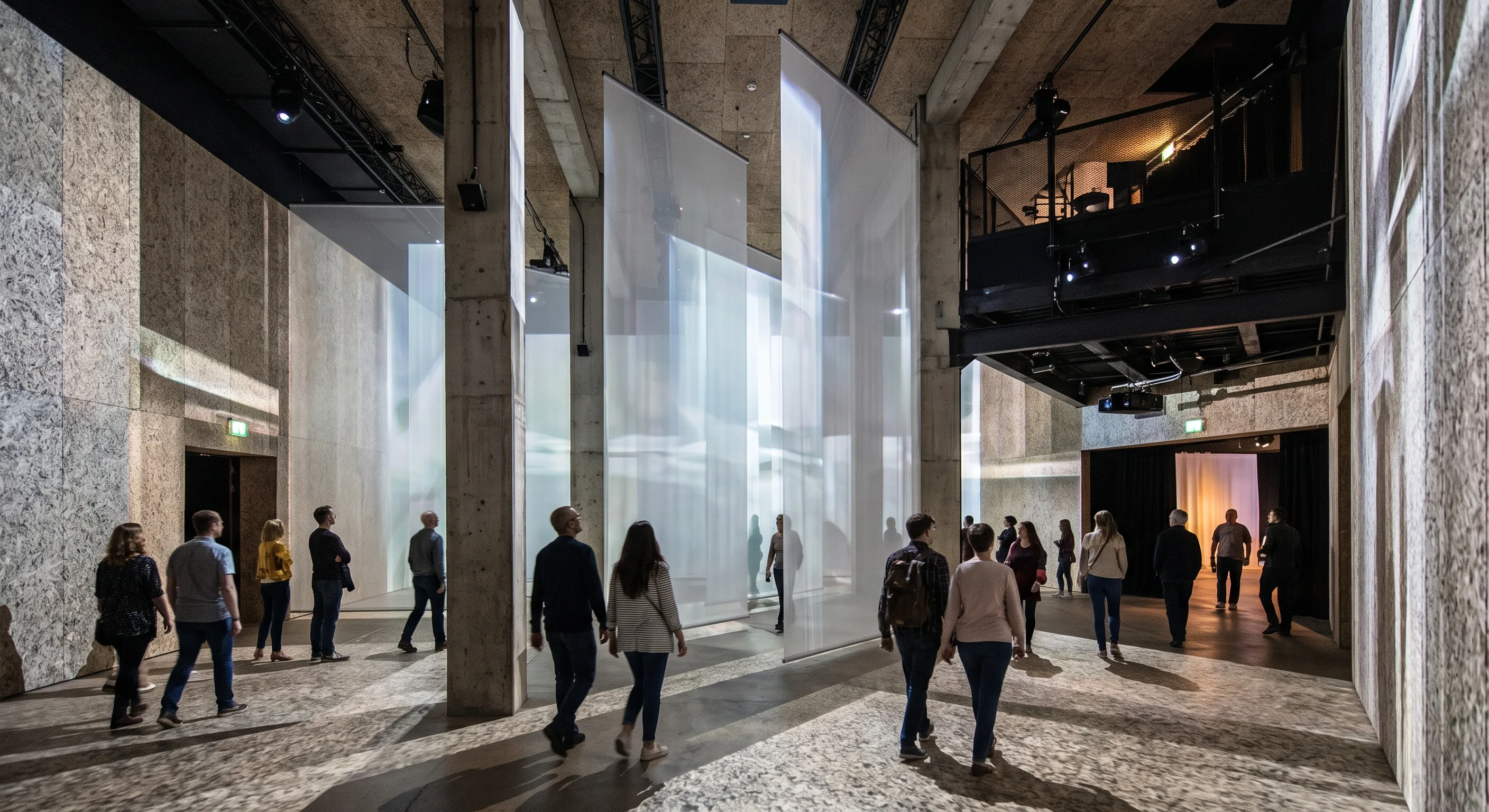
Immersive environment design asks a simple question: how do we make people feel inside a world? The answer combines narrative choices with practical design. Start with a clear concept that explains what the audience should sense—curiosity, tension, calm, wonder. From there choose visual style, materials and interactive elements that support that feeling.
Materials matter. Textured surfaces, reflective panels and layered screens create depth. Sound design and scent can be subtle but powerful complements. Consider how audiences move through the space and design transitions so they never feel lost. Accessibility and safety are non-negotiable: immersive spaces should be welcoming to all visitors, including those with mobility or sensory needs.
Stage spatial aesthetics: balance of form and function
Stage spatial aesthetics is about how space is organised and composed. It’s an architectural eye applied to performance. Designers make choices about scale, proportion, and negative space to guide attention. A well-composed stage uses asymmetry, framing and focal points to draw the audience toward key actions.
Practical concerns—visibility, actor movement, rigging and sightlines—must be solved within aesthetic goals. For example, an LED backdrop may look stunning from the centre, but you must check edges and angles so the content reads correctly to the whole audience. Integrating scenic elements with lighting and projection preserves visual clarity while maintaining the intended aesthetic.
Digital art direction and visual media integration
Digital art direction steers the visual tone of a piece. It sets rules for colour palettes, typographic style, animation speed and overall composition of media. Good direction ensures that visuals align with the show’s story and the venue’s architecture. It prevents visuals from clashing with costumes, props or set pieces.
Interactive spatial design: inviting audience participation
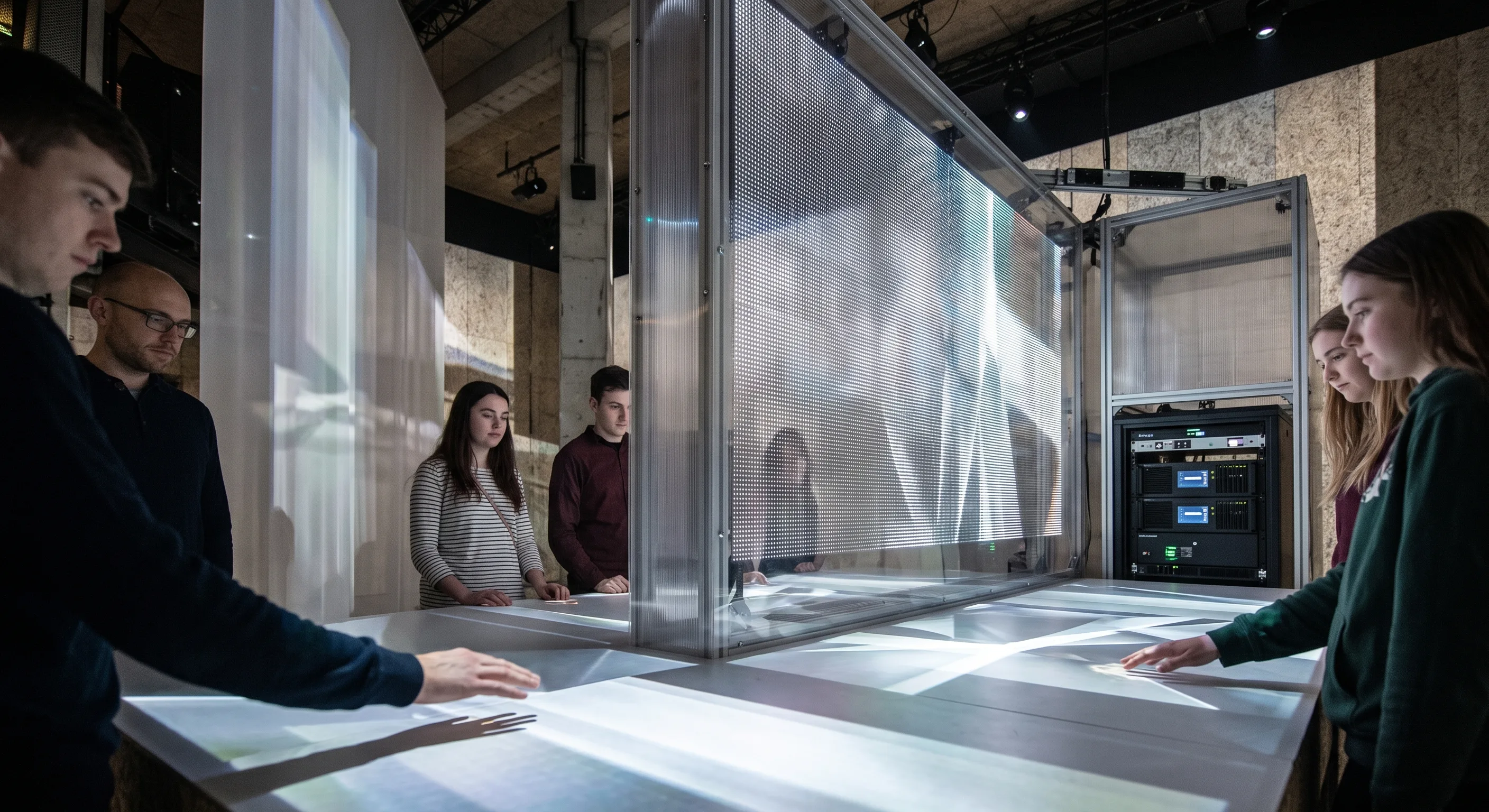
Interactive spatial design opens the door for audiences to influence the experience. Interaction can be subtle—lighting that responds to movement—or direct, like touchscreens or gesture-based controls. The most successful interactions are intuitive and meaningful. They don’t distract from the story; they extend it.
Designers should set clear boundaries for interaction. Decide what level of agency the audience has and how their input changes the environment. Systems must be robust: unreliable interactivity breaks immersion. Keep fallback behaviors so the show runs smoothly if a sensor or network fails.
Venue scenic design: adapting to different spaces
Venue scenic design recognises that each site has its own constraints and opportunities. A small black-box theatre requires different strategies from a large arena or a museum gallery. Portable set pieces, modular screens and adaptable lighting rigs help designers work across venues.
When designing for a specific venue, study sightlines, rigging points and back-of-house limitations. Consider how the design reads from different seating levels and standing areas. For touring shows, think about quick load-in and load-out, standardised rigging, and transport-friendly materials. Flexibility reduces cost and improves the longevity of a design.
Practical workflow: from concept to opening night
A typical workflow begins with research and a concept brief. Early sketches and mood boards communicate the visual world. Next comes technical design: CAD drawings, projection mapping plans and equipment lists. Once hardware and layout are agreed, content creation begins—video, generative art, animated textures and interactive logic.
Prototyping is vital. Test key elements in situ or in a scaled mock-up. Work through programming for cues, automation and interactive triggers. Plan for rehearsals with performers to fine-tune timing and sightlines. Finally, allocate time for full tech rehearsals where the entire system runs as it will on opening night.
Collaborating across disciplines
Modern scenography design is collaborative by nature. Directors, choreographers, lighting designers, sound designers, visual artists and technicians must share language and timelines. Regular workshops and cross-discipline reviews keep the team aligned. Clear documentation—cue lists, media logs and run sheets—reduces confusion during tech runs.
It helps to appoint a visual lead or scenographic director who oversees the integration of media with the physical set. That single point of responsibility smooths decisions and maintains consistency across all visual elements.
Sustainability and cost-conscious design
Sustainability matters more now than ever. Reuseable set modules, energy-efficient LED screens and low-power projection systems reduce environmental impact. Choose materials that can be repurposed or recycled. Digital elements often reduce the need for painted flats and one-use scenic pieces, but they bring electronic waste and power demands; plan responsibly.
Cost-conscious designers aim for high impact with modest budgets. Strategic use of focal lighting, selective projection and clever masking can create a sense of scale without expensive builds. Prioritise what the audience will actually see and experience.
Trends to watch in the UK scene
In the UK, we’re seeing more hybrid performances that combine live action with streamed or VR elements. Museums and galleries are adopting scenographic approaches for exhibitions, using projection and sound to tell complex stories. Interactive installations are moving from festivals into permanent venues, bringing new audiences to theatre and performance.
Generative visuals driven by data and real-time inputs are also rising. They allow each performance to be unique while maintaining a consistent aesthetic. For designers, learning basic coding or partnering with generative artists opens new creative possibilities.
Reading notes
Start from the feeling the room should hold — curiosity, tension, calm, wonder — then choose surface, sound and movement to support it. Routes should stay readable. Access and safety are part of the design, including for visitors with mobility or sensory needs.
Projection mapping, LED walls and spatialised light belong with the set, not beside it. Plan surfaces, servers and the cue system together. LED is bright and crisp up close. Projection can cover a large or uneven surface for less money, if the room is dark enough.
A black-box theatre and an arena do not share a kit list. Modular screens and a repeatable rig help a show move. Check the picture from the side seats and the circle, not only from the centre.
FAQ: common questions about modern scenography and digital visual arts
What is the difference between scenography and set design?
Scenography is broader. It includes the overall spatial, visual and sensory environment for a performance—sets, lighting, sound and media. Set design focuses mainly on the physical structures and props. Scenography blends those elements with narrative and audience experience.
How do I choose between projection and LED screens?
Choose based on viewing distance, brightness, surface texture and budget. LED gives high brightness and crisp images for close viewing, while projection is flexible on different surfaces and can cover large areas more cheaply. Consider ambient light levels and maintenance needs, too.
Can small venues use immersive techniques effectively?
Yes. Small spaces can benefit from immersive design by using focused lighting, close-proximity projection, soundscapes and tactile set pieces. Intimacy can be turned into an advantage—audiences are closer to detail and more easily engaged.
What skills are useful for a career in digital art direction?
Useful skills include visual design, motion graphics, an understanding of projection and LED tech, basic coding for interactive elements, and good collaboration skills. Knowledge of stagecraft and theatre processes is also valuable.
How do you make interactive installations reliable for live shows?
Use robust sensors and hardware, plan reliable network architecture, and include fallback behaviors. Keep interactions simple and test extensively in the venue. Provide manual control options for operators in case of unexpected failures.
This journal
Tracikelly publishes the essay. The text is a reading of spatial practice in the United Kingdom. It is not a commission, a specification, or a claim made for a named studio.