United Kingdom · essay
Lighting Design & Atmospheric Creation in Public Venues
Architectural lighting design for UK public venues. Advice on commercial interior lighting, spatial illumination, dynamic systems and creating effective visual mood.
Good lighting is more than brightness. In public venues — theatres, galleries, hotels, restaurants, train stations and civic buildings — architectural lighting design shapes how people feel, move and use a space. Thoughtful lighting turns a room into an experience. Poor lighting makes even great architecture feel flat and unwelcoming.
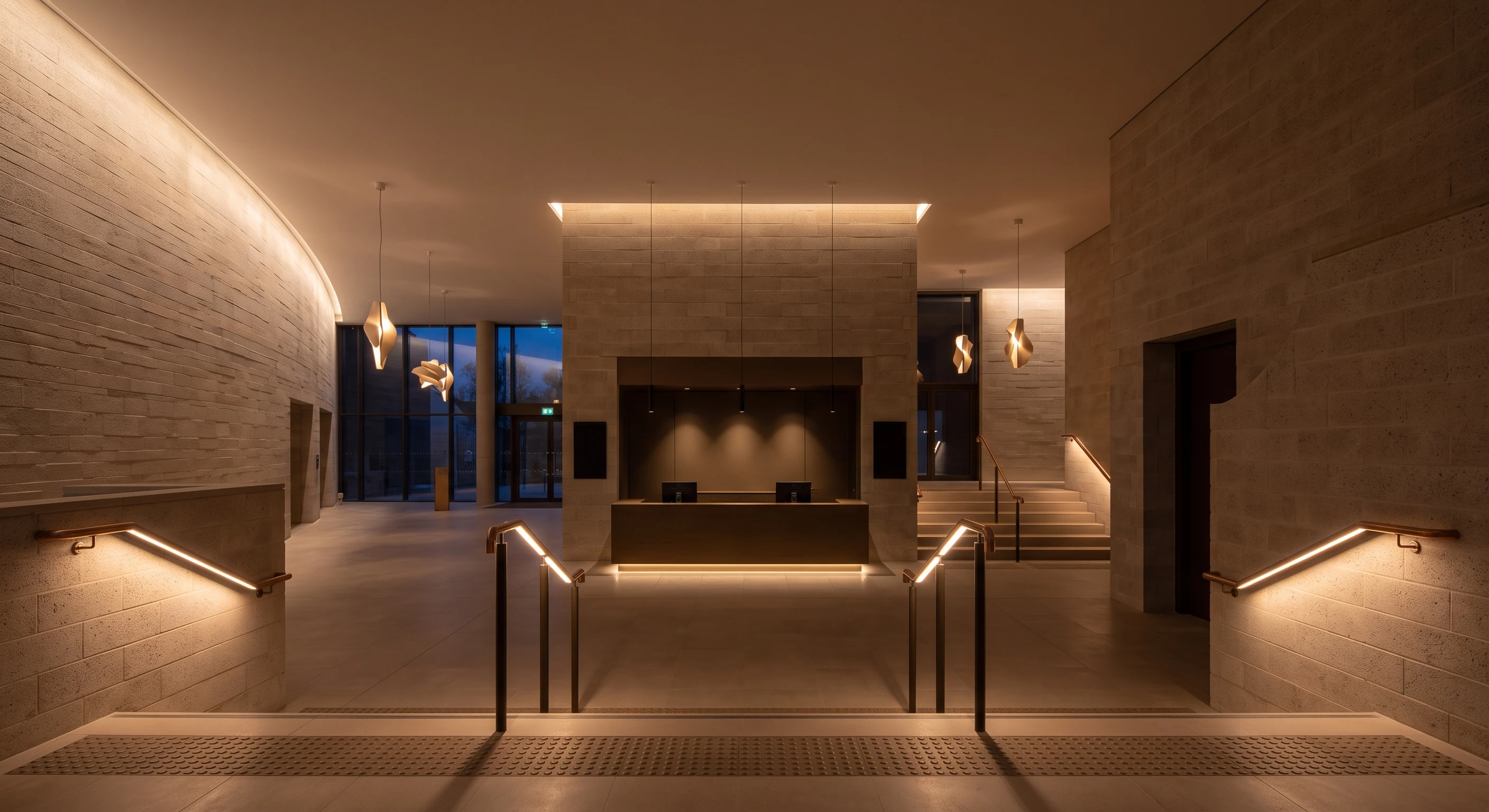
This article explains practical, easy-to-follow ideas for venue atmosphere creation using commercial interior lighting, spatial illumination and visual mood lighting. It covers principles, methods, and simple design choices you can discuss with an architect or lighting designer in the United Kingdom. The language is plain and focused on real-world results rather than technical jargon.
Why architectural lighting design matters
Architectural lighting design is the deliberate use of light to support a building’s function and to highlight form. In public venues, it helps visitors find their way, feel safe, and enjoy what they came for. Good lighting does several things at once:
Supports tasks — reading menus, finding seats, checking signage.
Creates mood — warm and intimate, bright and energetic, calm and contemplative.
Defines space — separating areas, highlighting features, or making small spaces feel larger.
Guides movement — through layers of light and contrast.
When planners consider architectural lighting design from the start, they avoid last-minute fixes that look tacked-on. Early integration saves money and gives a cohesive look that supports the venue’s purpose and brand.
Key principles of venue atmosphere creation
Creating atmosphere is about balance. Here are simple principles to apply when you plan visual mood lighting for any public space.
Layer light: Use three main layers — ambient (general), task (functional), and accent (decorative). Ambient light sets the base level. Task light helps with specific activities. Accent light draws attention to features like artwork or architectural details.
Control contrast: Too much contrast makes areas hard to read; too little makes an interior flat. Use contrast to focus attention and create depth without making spaces uncomfortable.
Colour temperature: Warm light feels cosy; cool light feels energetic or clinical. For hospitality and cultural venues, favour warm to neutral tones. For transit hubs or retail where alertness helps, slightly cooler temperatures can work well.
Dimming and flexibility: A venue’s needs change over a day or for different events. Dimmers and simple control scenes allow staff to switch moods quickly — from a rehearsal to a performance, or from daytime trade to evening atmosphere.
Human scale: Place lights where people expect them — at eye level or above circulation routes. Avoid glaring fixtures that sit at sight lines and create discomfort.
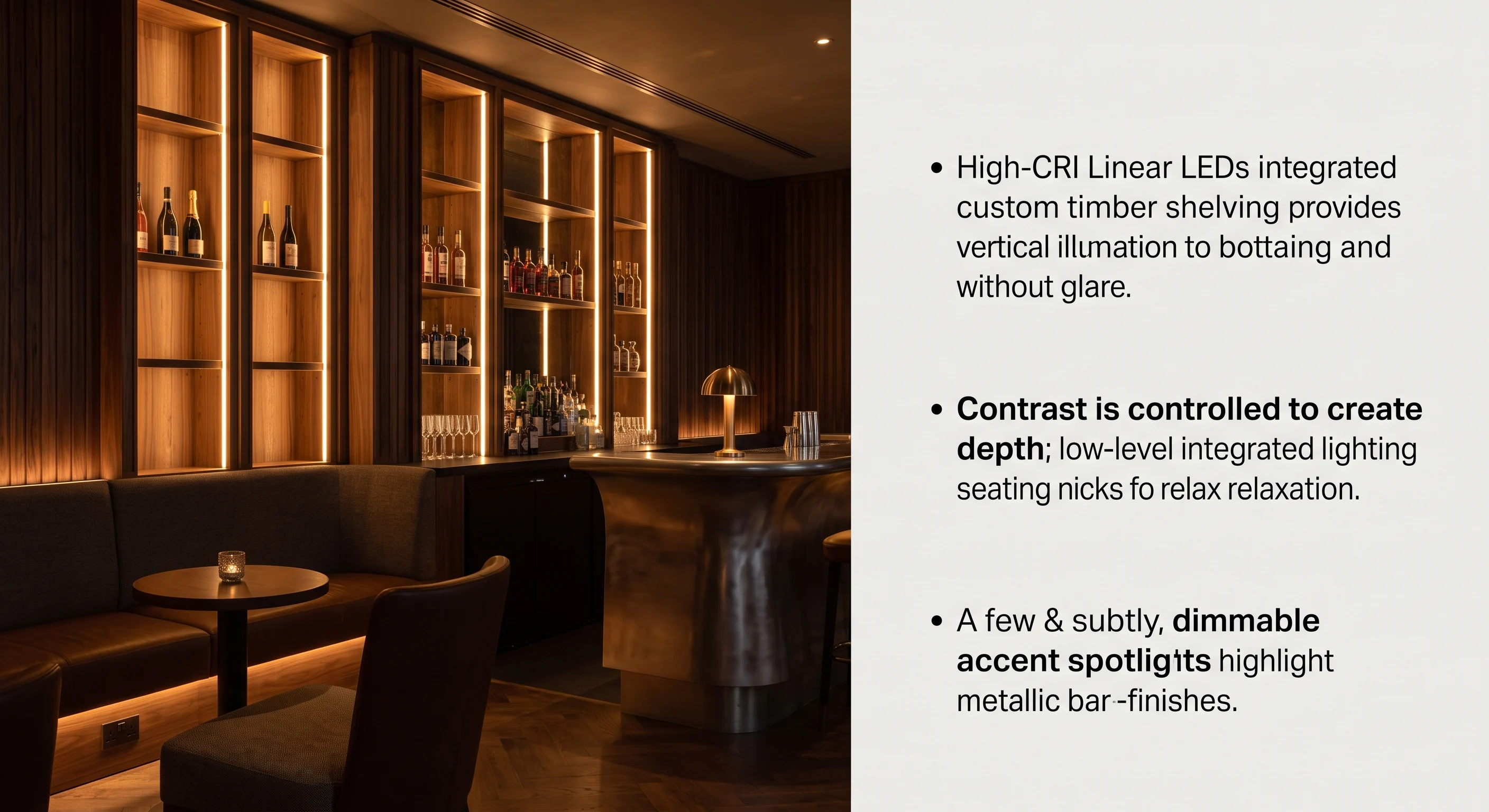
Applying these principles helps you shape a consistent experience across foyers, main halls, bars and back-of-house areas.
Commercial interior lighting strategies that work
Commercial interior lighting must balance function, cost and feel. For venue atmosphere creation, consider these practical strategies:
Use warm ambient layers: Provide a base of warm, even light in seating and circulation areas. This keeps people comfortable and makes surfaces look inviting.
Highlight focal points: Accent lighting on stages, sculptures or ticket desks creates hierarchy and draws attention where it’s needed.
Task lighting at service points: Bars, information desks and counters need brighter, focused lighting so staff and customers can see clearly.
Integrate lighting into architecture: Recessed coves, wall grazers and steps with LED strips look neat and last longer. Integration also keeps sightlines clean and reduces maintenance.
Choose energy-efficient sources: Modern LED fixtures offer good colour rendering and lower running costs. In the UK, energy efficiency also helps meet sustainability goals and reduces utility bills for venues with long opening hours.
Simple details matter: using warmer LEDs in dining areas and cooler LEDs in workspaces helps set the right tone without complicated installs. Also plan for maintenance — choose fittings that are easy to access in high ceilings so you don’t lose days of operation when bulbs need replacing.
Dynamic lighting systems and spatial illumination
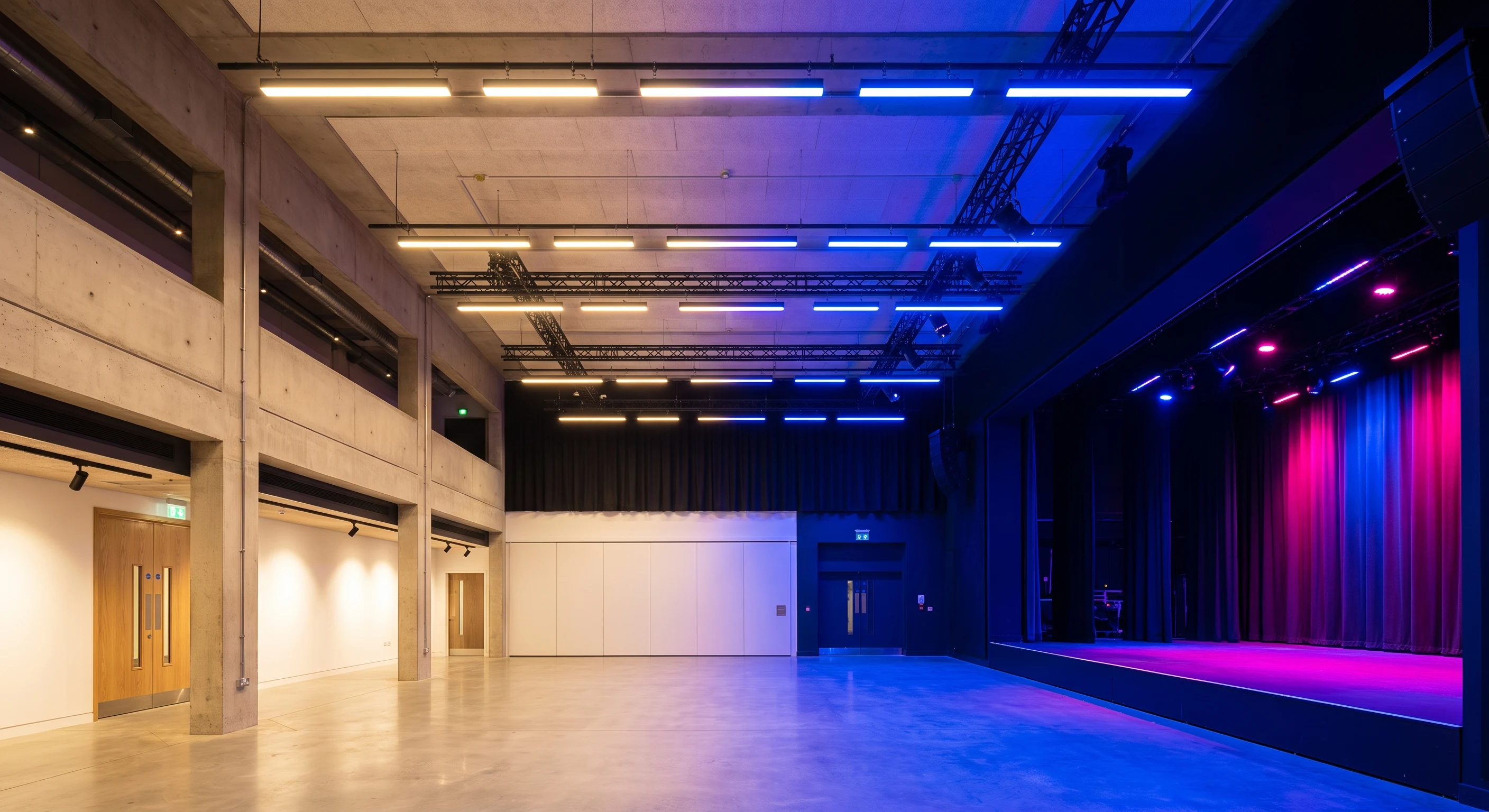
Dynamic lighting systems give venues the flexibility to change mood quickly. They are particularly useful in multi-use spaces where the same room hosts different events.
Common features of dynamic systems:
Pre-set scenes: Programmed lighting scenes let staff select common setups — e.g. daytime, evening dining, show mode, cleaning — at the touch of a button.
Zones and layers: Break a venue into lighting zones so you can light the stage differently from the auditorium or bar. Zoning preserves energy and allows tailored moods in adjacent areas.
Integration with AV and controls: Link lighting to sound and scene cues for live performances. Simple integration also allows external event teams to control lights without complex training.
Spatial illumination focuses on how light shapes volumes and surfaces. Use grazing light to show texture on masonry walls, downlights to create pools of light around tables, and uplighting to emphasise ceilings and arches. Combine direction, intensity and colour for desired effects while keeping visitor comfort front of mind.
Lighting psychology design and architectural visual effects
Light affects mood and behaviour. Understanding basic lighting psychology helps you design atmospheres that support the venue’s goals.
Some practical points:
Warmth fosters relaxation: Lower intensity and warmer tones encourage lingering in hospitality spaces. Restaurants and hotel lounges benefit from this approach.
Brightness increases alertness: Higher vertical illuminance and cooler tones help in transit hubs, galleries during daytime, or retail areas where reading product information is needed.
Focus directs attention: Accent lighting creates hierarchy and helps people understand where to look or move next. This is useful for guiding flows in museums or showing points of sale in a market hall.
Human-centric design: Consider sightlines and glare. Avoid placing bright sources directly in eye lines. Provide comfortable lighting for older visitors who need higher light levels for safe navigation.
Architectural visual effects are about emphasising structure. Use uplights to reveal buttresses or pendant lights to mark circulation routes. Keep effects subtle and work with material finishes — polished metal, textured plaster and timber respond differently to light and can alter perceived warmth and value.
Practical steps to start a lighting project
If you’re planning changes to a venue, follow a step-by-step approach to keep costs under control and results predictable.
Define the mood and function: Write a short brief: what moods must the venue support, and what tasks must lighting enable? Include opening hours, events and audience profiles.
Survey the space: Note ceiling heights, finishes, wiring access and maintenance routes. Photographs at different times of day help the designer understand daylight influence.
Set a flexible budget: Prioritise lighting that affects safety and guest experience first — circulation and task lighting — then allocate funds for accent and dynamic systems.
Work with a lighting designer or consultant: A specialist will produce lighting scenes and layouts, recommend fixtures and controls, and help align the design with building regulations and energy targets in the UK.
Test and tune: Trial key scenes before final installation. Small adjustments to angle, intensity or temperature often make a big difference.
Keeping the brief simple and practical will save time and produce a result that supports daily operations and special events alike.
Maintenance, sustainability and cost considerations
Longevity and running cost are major factors for public venues. Choose fixtures with good energy performance, durable finishes and replaceable drivers or lenses. A few practical tips:
Choose fixtures with easy access for bulb or driver replacement in high ceilings.
Implement basic maintenance schedules for cleaning and lamp checks — dust reduces light output significantly.
Consider motion or daylight sensors in low-use areas to reduce energy waste.
In the UK, many venues can access grants or incentives for energy-efficient upgrades. Speak to your local authority or a lighting professional to find suitable schemes that reduce upfront costs.
Case examples and common pitfalls
Examples to learn from:
A small theatre used warm ambient light with spot accents on the stage and dimmable house lights. The result: flexible moods and better audience comfort during pre- and post-performance times.
A city gallery layered a cool ambient light with warm accent lighting on paintings. This preserved accurate colour while creating a welcoming feel in public areas.
Common pitfalls to avoid:
Picking fixtures based on appearance alone without checking glare or maintenance access.
Using too many colours or effects that distract rather than enhance a performance or exhibit.
Ignoring daylight. Uncontrolled daylight can wash out carefully tuned interior scenes; use shading and light meters to plan transitions through the day.
Reading notes
Ambient light sets the room, task light serves the counter or the sign, and accent light picks out a stage, a desk or a piece of work. Contrast should give depth without making a route hard to read.
Preset scenes — daytime, evening, show, cleaning — let staff change the room without a new fit-out. Zones keep the stage, the auditorium and the bar on different levels. Colour-changing fittings are for a purpose, not a constant shift.
Warm light, about 2700K to 3000K, is for dining and lounges. Neutral suits mixed use. Cooler light, toward 3500K to 4000K, can help where people need to stay alert. Timber and paint will change how that colour reads.
FAQ
What is the difference between architectural lighting design and general lighting?
Architectural lighting design focuses on how light interacts with building form and human experience. General lighting often just provides enough light to see. Architectural design aims to support function, highlight structure and create mood, rather than only providing basic illumination.
How can I make a venue feel more welcoming without big costs?
Start with warm ambient lighting and clear task lights at counters and service points. Add a few accent fittings to highlight features. Dimmers and simple controls let you change mood without replacing fixtures. Small changes to lamp colour and angle often have large effects.
Are dynamic lighting systems suitable for small venues?
Yes — even small venues benefit from pre-set scenes and dimming. Affordable control panels and smart LEDs make it possible to have basic dynamic functions without complex wiring. The key is to keep scenes simple and staff training minimal.
What should I consider for safety and accessibility in lighting?
Provide even, glare-free light on circulation routes and steps. Ensure contrast for wayfinding, and brighter task lighting in areas where people read or handle tickets. Consider higher light levels for older visitors and comply with UK building and accessibility guidelines.
How do I choose the right colour temperature for different areas?
Use warm tones (2700K–3000K) for dining, lounges and hospitality to create comfort. Neutral (3000K–3500K) suits multi-use areas. Cooler temperatures (3500K–4000K) can be used in retail or transit spaces where alertness helps. Always consider the materials in the room — timber, fabrics and paint reflect colour differently.
This journal
Tracikelly publishes the essay. The text is a reading of spatial practice in the United Kingdom. It is not a commission, a specification, or a claim made for a named studio.